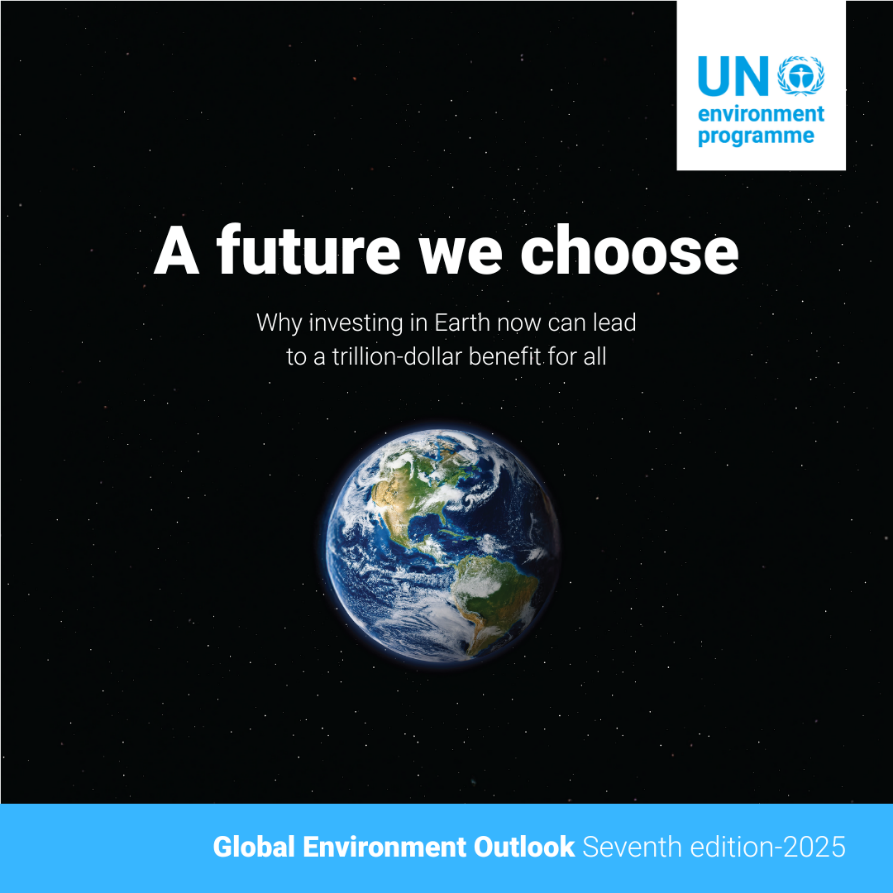


‘The circular bioeconomy is directly linked to environmental systems and is essential for the sustainable use of biological resources’, states the seventh Global Environment Outlook (GEO-7), a major UN report launched on 9 December 2025. The report highlights that circular economy and biobased solutions hold key opportunities to align economic and environmental goals and effectively address global environmental crises.
Developed under the auspices of the United Nations Environment Programme (UNEP), the Global Environment Outlook is the most comprehensive environmental assessment globally. The seventh edition (GEO-7) leaves behind mere diagnostic efforts and is focused on offering solutions to solve the connected issues of climate change, pollution and waste, biodiversity loss and land degradation, while unlocking social benefits and economic wealth. Produced over a period of three years by 287 scientists from 82 countries, and involving more than 800 reviewers, GEO-7 presents pathways for achieving transformative change of key systems such as energy, materials/waste, food and economic/financial systems.
Dr Sigrid Kusch-Brandt, EBNet member and co-Author of the GEO-7 Report, has focused on circular economy and biobased-solutions. These themes are covered across the report, while a separate chapter (Chapter 15) specifically looks at solution pathways towards circularity. “Circular practices are instrumental in preventing negative effects of the bioeconomy”, is one of the key messages. Different aspects of biotechnology for ecosystem improvement are covered in the report, including lab meat, bioplastics, smart farming, enhanced microbiology.
Global Environment Outlook 7: A future we choose – Why investing in Earth now can lead to a trillion-dollar benefit for all. United Nations Environment Programme (2025).
And you can watch a short video teaser available here