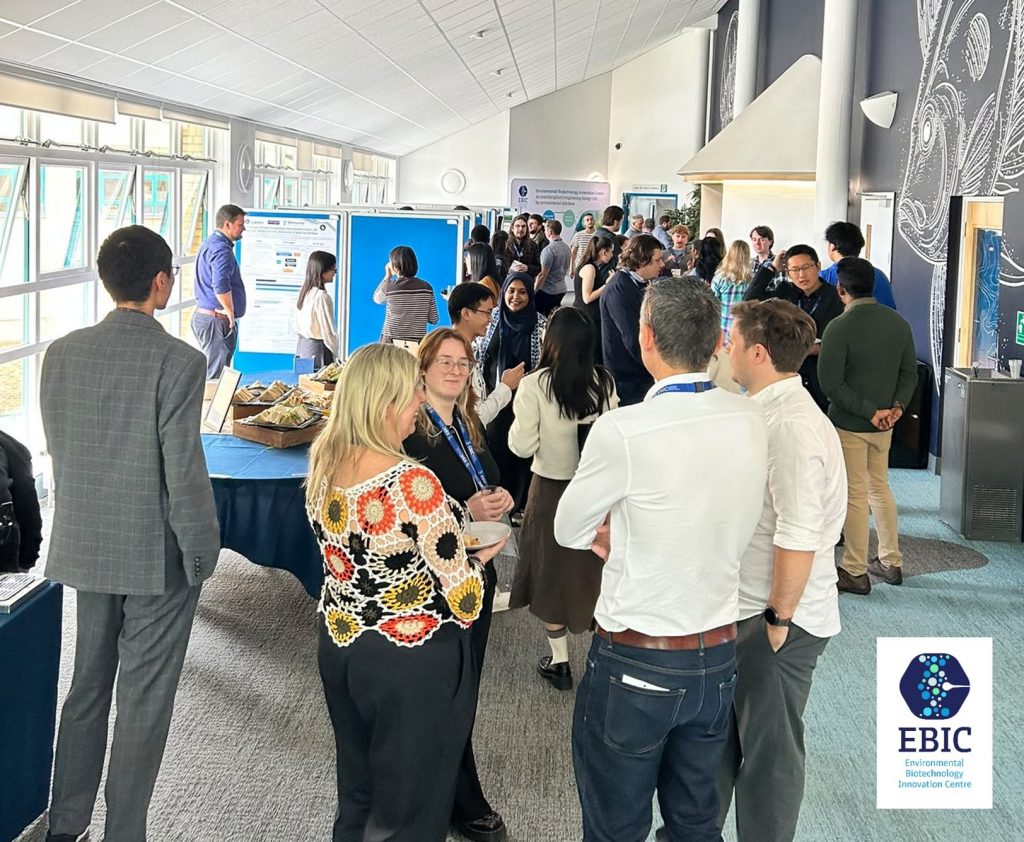


A very successful ECR conference by the Environmental Biotechnology Innovation Centre (EBIC) this week, with excellent presentations – and participants not just from the EBIC partner universities, but across the UK and around the world. Good to meet up with many EBNet members there too.
See the EBIC LinkedIn page for posts, and watch the website next week for lots more on highlights of the event, key sessions and prizewinners etc
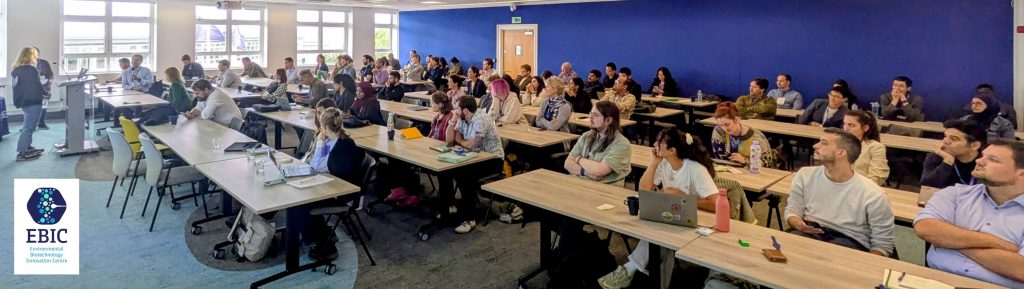
The day before the conference, EBIC also hosted the final of a one-year ECR Challenge proposed by Prof Bruce Jefferson of Cranfield University, in which postdocs and PhD students from across the consortium were asked to design a facility to test their innovations at pilot scale. The teams then presented their proposals to EBIC’s Independent Advisory Board in a sort of technological Dragon’s Den. Apparently they were all quite nervous, but professional performances from all.
This was a tough challenge for the ECRs, as many of them have no background in process design and engineering configuration: so they were working well outside their comfort zones. But the importance of interactions between microbes and the engineered systems in which they operate is one of EBNet’s key themes. And we are also very strong advocates of considering techno-economic and feasibility aspects from the earliest stages of an innovation process: while very few people can be expert in everything from fundamental biology to full-blown LCA, some basic assessment of what would be needed to operate a process at scale can radically and beneficially influence the choice of initial experimental objectives, parameters and design.
This ECR Challenge was an excellent idea, and our congratulations to EBIC for implementing it and to the ECRs for carrying it through!
Photographs courtesy of EBIC/Nicola Heaven